In my last blog I asked the question would robots in the workplace be good or bad for the workforce. There are many ways to look at this question depending on the approach you are taking. Aric Jenkins sites a report that suggests that robots could take up to 38% of jobs in U.S by 2030, impacting the transportation and storage, manufacturing and retail sectors(Jenkins, March 2017). CBC News recently reported that while the growing trend for artificial intelligence and robotics in the workplace could mean widespread job loss these trends could be more positive than negative to the economy. Reporting for CBC News Ramona Pringle sites a World Economic Forum Report that says 58 million news jobs will be created(Pringle, 2018 October).
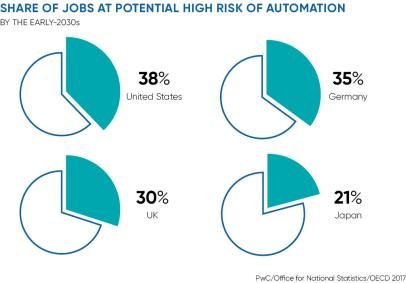
While these statistics may appear very negative to workforce, there are a number of positives to this trend. Jenkins notes research that says productivity gains by the use of robots could have a positive effect on salaries(Jenkins, March 2017). The World Economic Forum Report that predicts the creation of 58 million new jobs also talks about the fact that 75 million will be displaced by automation this will mean that the workforce will need to adapt And worker will need to

develop new skills. In the short term this could be a negative as workers whose skill set are replaced by more efficient robots lose their jobs, many new jobs will be created and these jobs will require much higher education levels, creativity and problem solving skills. Workers who are able to adapt may find themselves working in more challenging and productive environments.
So what will this new workplace look like? What kinds of jobs will disappear and what new jobs will emerge? How will humans and robots work together?
 Robots in the Workplace: will they still need us?
I think my job is safe.
LikeLike